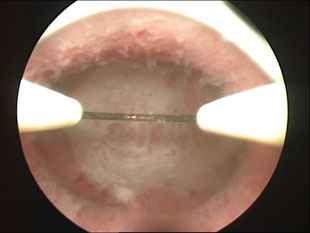
Cervical Stenosis
Normally the cervical canal is large enough to easily allow the passage of menstrual blood. Cervical stenosis is an abnormal narrowing of the cervical canal. Cervical stenosis may be present from birth or may be caused by a variety of factors which include infection, cancer, radiation, atrophy (thinning of the cervical lining due to lack of estrogen), or surgical procedures. Surgeries performed to treat abnormal pap smears such as cone biopsy, LEEP, and cryotherapy are the most common causes.
Cervical Stenosis Symptoms
Symptoms depend on whether the cervical canal is partially or completely obstructed and on the patient's menopausal status. Premenopausal patients will have a build-up of blood inside the uterus which causes sporadic bleeding and pelvic pain. Patients also have an increased risk of infertility and endometriosis.
Treatment for Cervical Stenosis
Treatment usually consists of the passage of small dilators into the cervix. This can be performed during an office visit or as an ambulatory surgical procedure if dilation proves to be difficult. Microhysteroscopy, where a 2-3mm telescope is inserted into the cervix, may be necessary to locate the cervical canal.
Contact Gynecology Surgeon Thanos Paraschos for a free initial consultation