PGD gender selection in Europe
Preimplantation Genetic Diagnosis (PGD) allows for the prevention of genetically transmitted diseases as well as the determination of the desired selected gender, with a nearly 100% accuracy rate of babies born risk-free of genetic disorders, because only embryos unaffected by the genetic condition are returned to the womb. One of the largest and most experienced PGD laboratories in Europe operates at EmBIO IVF Center in Athens, Greece.
Family balancing with gender selection
Many men and women come to us wondering how they can "balance" the number of girls or boys in their family.
Family balancing means that potential parents can determine the sex of their baby before pregnancy for either medical, cultural, or other reasons.
Today PGD gender selection in Europe is allowed for medical reasons.
It is a highly accurate method that offers a valuable diagnostic tool to couples at high risk of transmitting a genetic disorder to their future offspring.
What are PGD and PGS? Are they different?
PGD and PGS are technically the same tests. Both are specialized methods for prenatal screening and diagnosis of certain hereditary diseases or conditions.
Preimplantation genetic screening (PGS) is a test that checks an embryo for a normal chromosome number (46).
PGS can be used, for example, to detect Down syndrome, which occurs when there is an extra copy of chromosome 21, and the total number of chromosomes is 47 instead of the normal 46.
Preimplantation genetic diagnosis (PGD) is routinely used for pre-implantation diagnosis of cystic fibrosis, sickle cell disease, Tay-Sachs syndrome, muscular dystrophy and οf other inherited diseases.
For a pregnancy to be successful, the embryo must be free of genetic disorders and have a normal chromosomal make-up. A good quality embryo has a better chance of implanting successfully and developing into a baby.
Both PGS and PGD are safe and carry minimal risks as long as they are performed by an experienced IVF laboratory such as the Fertility Laboratory at Embio IVF Centre.
Book a Free Online Consultation with Dr Thanos Paraschos and his team
PGD / PGS Procedure
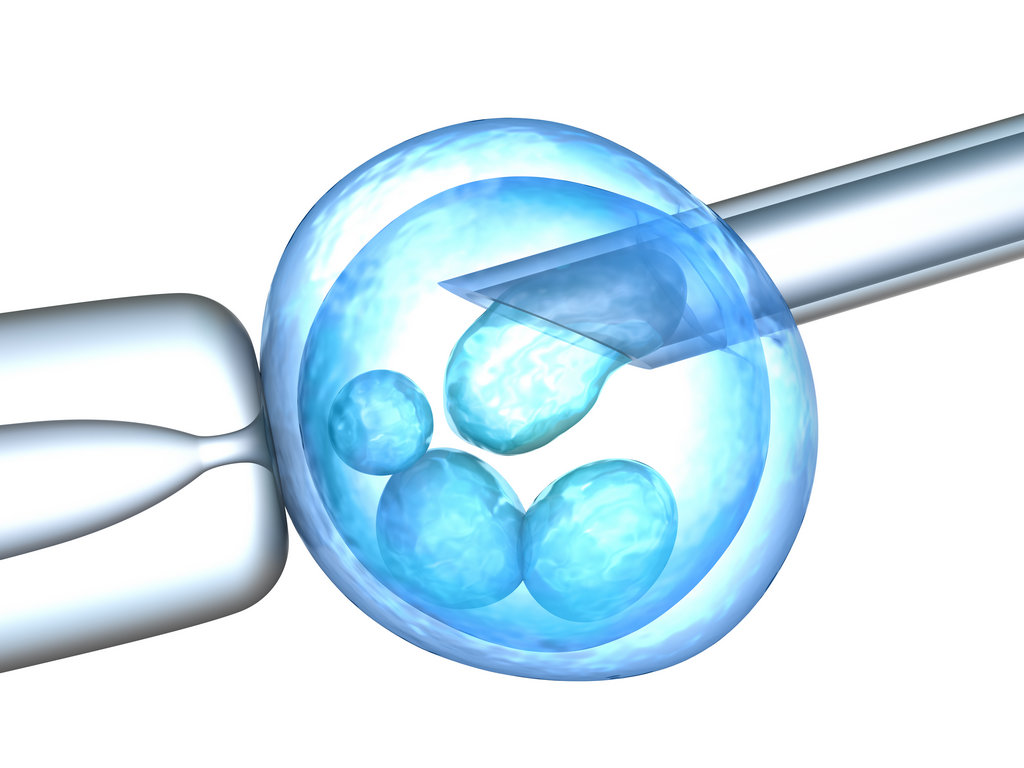
The first step to PGD or PGS is the creation of embryos outside the woman’s body by IVF. These embryos are cultured until they are between 6-10 cells (Day 3), so that one or two cells can be removed (cell biopsy) for genetic analysis. The removal of these cells does not harm the development of the embryo.
The cells are biopsied by either:
- fluorescent in situ hybridisation (FISH) for chromosome disorders
- polymerase chain reaction (PCR) for single gene defects.
Embryos not carrying the genetic disorder tested can then be transferred to the uterus, aiming for a normal pregnancy. Further analysis of the developing conceptus later in pregnancy can confirm the results of PGD analysis. This is done by sampling the placental material (chorionic villus sampling).
Genetic Diseases Diagnosed by PGD
Genetic diseases associated with a high risk of transmission (25-50%) and significant morbidity and mortality rates (e.g., aneuploidy) can be screened for by Pre-implantation Diagnosis.
IVF Success with PGD
Studies have shown that PGD can:
- double the chances of successful implantation of the embryo
- reduce pregnancy loss as much as three times,
- increase the likelihood of live births.
Research has found a reduction in miscarriage among IVF patients who did not have recurrent miscarriages, from 23% to 9%.
In women with an average age of 40, it was found that the chance of an embryo implanting successfully doubled.
IUI with Gender Selection
Most fertile, healthy couples use MicroSort® with intrauterine insemination (IUI). Monitoring your ovulation cycle is essential to determine the best timing for IUI. Careful monitoring using blood hormone tests and pelvic ultrasound may be recommended to improve the timing of insemination (and pregnancy rate). Monitoring can also be completed with your local obstetrician/gynaecologist or local infertility physician.
On the scheduled day of the IUI – Sex Selection procedure at EmBIO laboratory, the husband will produce a semen specimen in the morning. The sperm will be sorted, and the wife will have her IUI done later that same day.
- PGD with Microsort
-
Developed by GIVF, MicroSort® is GIVF’s exclusive preconception technology for sorting sperm to increase the likelihood of conceiving a child of a particular gender. MicroSort® may be particularly interesting to patients with a family history of gender-linked genetic disease.
MicroSort®’s patented technology separates sperm into those that produce females and those that produce males. Sorted specimens enriched in male or female-producing sperm are then used for intrauterine insemination or for in-vitro fertilization.
Study data so far indicate that patients who wish to have a girl are successful in conceiving a female baby 9 out of 10 times; those seeking a boy are successful approximately 3 out of 4 times.
Donor Egg IVF with Gender Selection for Medical Reasons
During an in vitro fertilization PGD cycle with intra-cytoplasmic sperm injection (ICSI), if the wife is over 39, PGD-sorted specimens can be used with a donor egg IVF cycle.
Gender Selection with Donor Sperm
Appropriately screened semen donor samples from EmBIO Cryobank can be used if needed. Several semen vials are usually required to obtain an adequate number of total motile sperm (sperm quality). The sufficiently motile sperm samples are thawed, and the sorting is then performed.
PGD to Prevent a Miscarriage
Many couples opt through PGD gender selection in Europe or US to screen their embryos for certain chromosomal abnormalities (i.e., Down syndrome) or familial genetic diseases.
More than 50% of embryos from women aged 35 to 39 have chromosomal abnormalities.
The percentage for a woman over 40 increases to 80% or higher. PGD-screened embryos have a reduced risk of chromosome abnormalities and a lower spontaneous loss rate.
The bottom line is that IVF and PGD provide a greater chance of having normal embryos of the desired gender available for transfer and cryopreservation.