Genetic Diseases that can be diagnosed by PGD
Almost all genetically inherited conditions that are diagnosed in the prenatal period can also be detected in the pre-implantation period. Diseases which have a high risk of transmission (25-50%) and are usually associated with significant morbidity and mortality can be screened for by this technique.
It is possible to perform PGD for any genetic disorders, autosomal dominant, recessive or X-linked, with an identifiable mutation. For pathologies caused by expansions of nucleotidic triplettes (such as Fragile X, Huntington's disease, Myotonic Dystrophy, etc.) it is possible to obtain only information on the absence of triplette expansion. Whether or not to undergo examination must therefore be evaluated case-by-case. Below is a list with the most frequent genetic diseases that can be diagnosed by PGD:
- Diseases A - E
-
ALS: Amyotrophic Lateral Sclerosis 1
Aardenburg Syndrome Type I / III
Aardenburg Syndrome Type II
Aarskog
Acenomatous Polyposis Coli
Achondroplasia
Actin-Nemain Myopathy
Acute Intermittent Porphyria
Acute Megakaryocytic Leukemia
Adrenoleukodystrophy
Agammaglobulinemia-Bruton
Alagille Syndrome
Aldolase A deficiency
Alpers Syndrome
Alpha Thalassemia
Alpha Thalassemia/Mental Retard
Alpha-1-Antitrypsin Deficiency
Alport Syndrome
Alzheimer Disease 3
Amacular Dystr-Best Vitelliform
Amegakaryocytic Thrombocytopenia, Congenital
Amyloidosis I-Translhyretin
Angioedema, Hereditary
Aniridia
Ankylosing Spondylitis
Antithrombin Deficiency
Apert Syndrome
Ataxia Telengiectasia
Bardet-Biedl Syndrome-Type 1
Bardet-Biedl Syndrome-Type 10
Basal Cell (Gorlin) Synd
Batten Disease, Neuronal Ceroid Lipofuscinosis 3
Beta Thalassemia
Birt-Hogg-Dube
Bloom Syndrome
Brachydactyly-Type C
Breast Cancer
CACH-Ataxia
CADASIL
Canavan Disease
Cardiomyopathy, Barth Type Dilated
Cardiomyopathy, Dilated Hypertrophic
Cardiomyopathy, Familial Hypertrophic 2
Carnitine-AcylCarn Translocase
Ceroid-Lipofuscinoses-Batten Disease
Ceroid-Lipofuscinoses-Finish Type
Ceroid-Lipofuscinoses-Jivenile Type
Charcot Marie Tooth Neuropathy 1B
Charcot Marie Tooth Neuropathy 2E
Cherubism
Choroideremia
Chronic Granulomatous Disease
Citrulinemia
Cleidocranial Dysplasia
Cockayne Syndrome Type B
Colon Cancer
Congenital Adrenal Hyperplasia
Congenital Disorder Glycosylation, 1a-CDG-1a
Congenital Disorder Glycosylation, 1c-CDG-1c
Congenital Disorder Glycosylation, 1e-CDG-1e
Congenital Disorder Glycosylation, 1g-CDG-1g
Congenital Erythropoietic Porphyria
Cosman-Cyclic Neutropenia
Crigler Najjar
Crouzon Syndrome
Cystic Fibrosis
Cystinosis
Darier Disease
Darnitine-AcylCarn Hypertrophic 2
Deafness, Recessive
Denys-Drash Wilms Tumor
Desmin Storage Myopathy\Diamond Blackfan
Duchenne muscular dystrophy
Dyskeratosis Congenita
Dystronia
Dystrophia Myotonica-1
Dystrophia Myotonica-2
Ectodermal Dysplasia I
Ehlers-Danlos
Emery-Dreifuss X-linked AutoDom Dystrophy
Emery-Dreifuss X-linked Muscular Dystrophy
Epidermolysis Bullosa\Epidermolysis Bullosa / Pyloric Atresia
Epidermolysis Bullosa\Epidermolysis Bullosa Simplex
Epidermolysis Dystrophic Bullosa
Epidermolysis Hyperkeratosis - Diseases F - N
-
Fabry
Facioscapulohumeral Dystrophy
Factor 13 Dysautonomia
Familial Exudative Vitreoretinopathy
Fanconi Anemia A
Fanconi Anemia C
Fanconi Anemia F
Fanconi Anemia J
FanconiaAnemia G
Fragile X
GM1 Gangliosidiosis, Morquio
Galactosemia
Gastric Cancer, Cadherin-E-1
Gaucher Disease
Genotyping p Molecular Signature - Fingerprinting
Gerstmann-Straussler Disease
Glutaric Acidemia 2A
Glycine Encephaloopathy GLDC 80%
Glycogen Storage Disease 1, Von Girke- GSD1a
Glycogen Storage Disease 2, Pompe- GSD2
HLA DRBeta1 Class II MHC
HLA-Histocompatability, Transplantation Matching
Hallervorden-Spatz-Pantothenate
Hemophilia A
Hemophilia B
Hereditary Hemmorrhagic Telangietasia Type 1
Histiocytosis, Hemophagocytic Lympho
Holt-Oram
Homocystinuria
Hunter Syndrome
Huntington Disease
Hurler Syndrome
Hydrocephalus: X-Linked
Hyper IgM
Hypokalemic periodic paralysis
Hypophosphatasia
Hypophosphatemic VitD Rickets
IPEX - Immunodysregulation, polyendocrinopathy, and entereopathy, x-linked
Icthyosis, Congenital, Harlequin
Icthyosis, H-Steroid Sulf Def
Incontinentia Pigmenti
Joubert Syndrome
KELL Antigen
Kalimann Syndrome
Kennedy-Spinal bulbar
Krabbe
Leber Retinal Congenital Amaurosis-I
Leber Retinal Congenital Amaurosis-X
Leigh Syndrome
Leiomyomatosis-Hereditary
Lesch-Nyhan
Leukemeia, Chronic Myelogenouys, Transplantation
Leukemia, Acute Lymhocytic Transplantation
Leukemia, Acute Lymphocytic, Transplantaion
Leukemia, Acute Myelogenous, Transplantation
Leukocyte Adhesion Deficiency
Li-Fraumeni Syndrome
Limb Girde MD
Long QT Syndrome
Long-Chain-AcylCoA Dehydrogenase
Lymphedema-Hereditary
Lymphoproliferative Disorder, X-linked
Machado-Joseph Spinocerebellar Ataxia-3
Maple syrup Urine Dz E1-Beta
Marfan Syndrome
Meckel-Gruber Syndrome-3
Menkes
Merosin-deficient congenital muscular dystrophy type 1A
Metachromatic Leukodystrophy
Methlmalonic Acidemia
Methylocobalamin G Deficiency
Mitochondrial Myopathy-Complex I
Mucolipidosis 2, I Cell
Multiple Endocrine Neoplasia 1
Multiple Endocrine Neoplasia 2 MEN2
Multiple Extostoses
Myasthenia Gravis
Myotonic Muscular Dystrophy
Myotubular Myopathy X-Linked
NEMO immunodeficiency
Nephrosis - Finnish
Neurofibromatosis 1
Neurofibromatosis 2
Niemann-Pick - Type A
Niemann-Pick - Type C
NonKetonic Hyperglycinemia
Noonan
Norrie - Diseases O - Z
-
Occulocculaneous Albinism I, OCA1
Occulocculaneous Albinism II
Ocular Albinism X-Linked
Oculodentodigital Dysplasia
Omithine transcarbamylase deficiency
Optic Atrophy 1
Osteogenesis Imper II/IV and Chondrodysplasias
Osteogenesis Imperfecta I
Osteopetrosis
Pachyonychia Congenita
Pancreatitis Hereditary
Pancreatitis, Chronic Calcific
Paraganglioma-Nonchromaffin
Pelizaeus-Merzbacher, X-linked
Pendred Syndrome
Periventricular Heteropia
Persistent Hyperinsulinemic Hypoglycemia of Infancy
Peutz-Jeghens Syndrome
Pfeiffer Syndrome
Phenylketonuria PKU
Pheochromocytoma
Plycystic Kidney Disease
Pompe, Glycogen Storage Disease 2, GSD2
Propionic Acidemia
Pseudohypoparathyroidism 1a
Retinitis Pigmentosa
Retinitis Pigmentosa X-linked
Retinitis Pigmentosa adRP10
Retinoblastoma 1
Retinoschisis
Rett Syndrome
Rhesus blood group D
Rhizomelic Chondrodysplasia Punctata
Rothmund-Thompson Syndrome
SCIDX1
SacralAgenesis
Sanfilippo A
Sanfillipo B
Sathre-Chotzen Craniosynostosis
Severe Comb Immunodef
Shwachman-Diamond Syndrome
Sickle Cell Anaemia
Simpson-Golabi-Behmel Syndrome
Sjogren-Larsson
Smith-Lemli-Opitz
Sorsby Fundus Dystrophy
Spinal Muscular Atrophy SMA
Spinocerebellar Ataxia-1, SCA1
Spinocerebellar Ataxia-2, SCA2
Spinocerebellar Ataxia-3, SCA3, Machado-Joseph
Spinocerebellar Ataxia-7, SCA7
Spondyloepiphyseal Dysplasia, Congenital
Steroid Sulfatase Deficiency
Stomack-Ovarian-Endometrial Caner
Supravalvular Aortic Stenosis
Surfactant-Pulmonary B
Tay-Sachs
Thrombocytopenia with Beta-Thalassemia
Torsion Dystonia
Transplantation-BoneMarrow-StemCelll
Treacher Collins
Tubercus Sclerosis 1
Tubercus Sclerosis 2
Ulrich Congenital Muscular Dystrophy
Usher Yndrome
VanderVoude-Popliteal Pterygium
Von Hippel-Lindau Disease
West Syndrome
Wilms Tumor
Wiskott-Aldrich Syndrome
Wolman Lipase A
Zellweger Peroxisome Disease
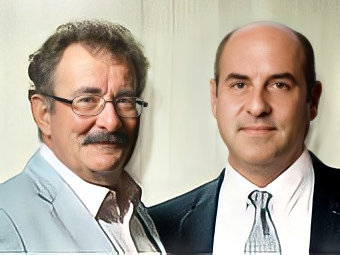
Dr Thanos Paraschos: trained by the Father of PGD, Lord Professor Robert Winston
As a Senior Registrar/Research Fellow to Lord Professor Robert Winston, Dr Paraschos was responsible for organising and implementing the PGD programme to patients at Hammersmith Hospital, where the first genetic pre-implantation diagnosis in the world was performed on an embryo.
Book a Free Online Consultation with Dr Thanos Paraschos and his team
Aneuploidy Screening
What is PGD for aneuploidy?
Aneuploidy screening minimizes the chance that a transferred embryo has a chromosome abnormality.
Read more about aneuploidy screening.
Infertility due to chromosomal translocations
Two chromosomal abnormalities − Reciprocal translocations and Robertsonian translocations − may be the reason behind a couple’s infertility. They involve the rearrangement of chromosome fragments.
According to research, roughly one in two spontaneous abortions involves an unbalanced translocation.
Preimplantation Genetic Diagnosis (PGD) for translocation determination may improve pregnancy rates after failed IVF attempts, as well as live birth rates in cases of spontaneous abortions.
- Chromosome Translocations and Genetic Disorders
-
Reciprocal translocations occur in approximately one out of 625 individuals. Also called non-Robertsonian translocations, they have been associated with male factor infertility. This type of chromosome abnormality has been more frequently found in men with azoospermia and in fewer cases in men with oligozoospermia.
Robertsonian translocations (centric fusions or whole-arm translocations) affect roughly one out of 1000 people born. They involve the rearrangement of two homologous or non-homologous pairs of chromosomes. When this type of chromosome translocation occurs, two chromosomes out of the 2 pairs of 23 chromosomes fuse in one, and the result is a karyotype with 45 chromosomes instead of 46.
Although balanced translocations (BT) do not involve obvious symptoms other than infertility, BT carriers are statistically more likely to create gametes (sperm or eggs) with an unbalanced translocation.
Chromosome Translocations and Genetic Disorders
When a child is born with an unbalanced translocation it means that he/she has inherited a chromosome with less or excessive genetic material from one BT-carrier parent. So despite the parent’s balanced translocation (an even exchange between two non-homologous chromosomes, with no genes lost or in excess), the offspring with the unbalanced translocation will present a genetic condition such as Patau Syndrome (trisomy 13) or Down’s Syndrome (trisomy 21) associated with a Robertsonian translocation.
PGD for Translocation Determination
Carriers of balanced reciprocal or Robertsonian translocations are usually unaware of their chromosomal abnormality. However, when there are recurrent miscarriages or when a child is born with a genetic disorder, the couple wishing to achieve a normal pregnancy may consult a genetic counsellor. Since a balanced translocation carrier runs an increased risk for an embryo with an unbalance chromosome translocation, the genetic scientist will explain the risks for a miscarriage and/or the child’s congenital defects (mental retardation etc), and inform the couple of their options.
- How can PGD help us if I or my partner carry a structural chromosome rearrangement?
-
A member of a couple may carry
- a balanced translocation (exchange of chromosome material between two or more chromosomes)
- a Robertsonian translocation (the joining of two chromosomes)
- other structural rearrangements
This increases the risk for a pregnancy with an unbalanced chromosome complement, which can cause birth defects, mental retardation, and/or miscarriage.
PGD for structural chromosome rearrangements allows couples to decrease these risks and to increase the chance of a healthy ongoing pregnancy.
Prevent Huntington Disease with PGD
What is Ηuntingtons Disease
Huntington's disease (HD) is a genetic disorder, a nerve disease that affects the nervous system causing it to degenerate. This has an immediate effect on muscle coordination which leads to psychiatric problems. The disorder usually appears in mid-adult life, between 35 and 44 years of age
- Ηuntington Disease Symptoms & Treatment
-
Symptoms of Huntington Disease
The most common symptoms linked to this nervous system disease are:
- changes in behavior (irritability, paranoia etc)
- abnormal movements (fast, sudden, sometimes wild jerking movements mainly of the arms, legs and face and sometimes of other body parts), and finally
- progressing dementia (memory and judgment loss etc).
In most cases, changes in the person’s behavior occur before the deterioration in movement. The disease can affect both men and women, because it is characterized as an autosomal dominant mutation (chromosome 4):
- If one of the parents has Huntington disease, their offspring have a 50% chance of inheriting the defective gene
- If a child gets the gene from both his or her parents, they will have the disease at some point in their life. And they will also pass it on to the next generation.
Huntington Disease Treatment
Unfortunately, there is no cure for Huntingtons at the time being. The only thing doctors can do is to slow down the development of the symptoms for as long as possible.
Therefore, preimplantation genetic diagnosis seems to be the only way to prevent this disease from passing on to the next generation.
Cystic fibrosis (CF)
Cystic fibrosis is a hereditary disease affecting the exocrine (mucus) glands of the lungs, liver, pancreas, and intestines, causing progressive disability due to multisystem failure.
Thick mucus production results in frequent lung infections. Diminished secretion of pancreatic enzymes is the main cause of poor growth, greasy stools, and deficiency in fat-soluble vitamins. Males can be infertile due to the condition congenital bilateral absence of the vas deferens. Often, symptoms of CF appear in infancy and childhood.
Individuals with cystic fibrosis can be diagnosed prior to birth by genetic testing. Newborn screening tests are increasingly common and effective. There is no current cure for CF, and most individuals with cystic fibrosis die young: many in their 20s and 30s from lung failure if lung transplantation is not performed. Cystic fibrosis is one of the most common life-shortening genetic diseases (autosomal recessive disease). It is most common among western European populations; one in twenty-two people of Mediterranean descent are carriers of one gene for CF, making it the most common genetic disease in these populations.
PGD for Late-onset Disorders
Some genetic disorders are apparent since birth (Down Syndrome), while others may develop at childhood, adolescence or adult life. Among adult-onset genetic diseases are neurodegenerative conditions (Alzheimer’s, Huntington’s), cardiomyopathies and cancer susceptibilities.
Preimplantation Genetic Diagnosis (PGD) may show the predisposition for these genetic diseases.
- Read more...
-
There are adult-onset diseases which may be triggered by environmental or other factors, and for that reason it is possible that the predisposed person may never develop them during their entire life. Some types of cancer (breast cancer, ovarian cancer) and heart disease belong to this category of late onset diseases. The second type of adult onset disorders, (e.g. Huntington’s) will appear regardless of other causes besides the inherited single gene responsible.
Preimplantation Genetic Diagnosis (PGD) may show the predisposition for these genetic diseases. This means that the couple’s desired child runs the risk of developing these disorders later in life. Couples opting for in-vitro fertilization (IVF) for their infertility treatment may choose to combine a PGD test to screen their embryos for a late onset disease reported in their family history.
For example, knowing that for the time being there is no cure for Alzheimer’s disease, the couple may not want to risk transmitting such a painfully alienating condition to their offspring. The appropriate genetic testing would thus be an advisable option.
Inherited Cancer Predisposition
Five out of a hundred people with cancer have inherited a copy of a susceptibility gene. Those people were born with a varyingly increased risk of developing cancer.
- Read more...
-
Statistically, we all run the risk of developing cancer within the span of our lifetime. In people without an inherited predisposition gene it takes a considerable number of genetic mutations to cause the uncontrolled growth that is cancer. As the genetic changes are accumulated over time, the chances of cancer development increase with age.
When someone has a hereditary cancer the faulty gene is present in each cell of that person’s body, and that includes a woman’s embryo. As each of the carrier’s cells contains the cancer predisposition gene since birth, cancer will develop earlier than in a non-carrier’s body. For example, women with an inherited breast cancer gene have more chances of developing the disease in their late thirties or in their forties, that is, two to three decades earlier than women without the faulty gene.
The breast cancer faulty gene, however, belongs to the low-penentrance type of cancers, where the faulty predisposition gene causes cancer development in a relatively small percentage of carriers. Highly penetrant types of hereditary cancer may affect as many as 100% of the carriers.
Some couples having a hereditary type of cancer that may affect their child’s life at childhood or even at birth, consider preimplantation genetic diagnosis (PGD) with their in-vitro fertilization (IVF).
Sickle-Cell Anaemia
How to avoid sickle-cell anaemia

Bring your family dream to life
Patients from many different countries come to Embio IVF Center, Europe’s premier fertility center well-known for our personal approach to every fertility treatment and our no-waiting-list policy.
Our team can provide you with superior care throughout your family-building journey, thanks to the fertility-friendly regulations in Greece and our highly selective egg donor databases.